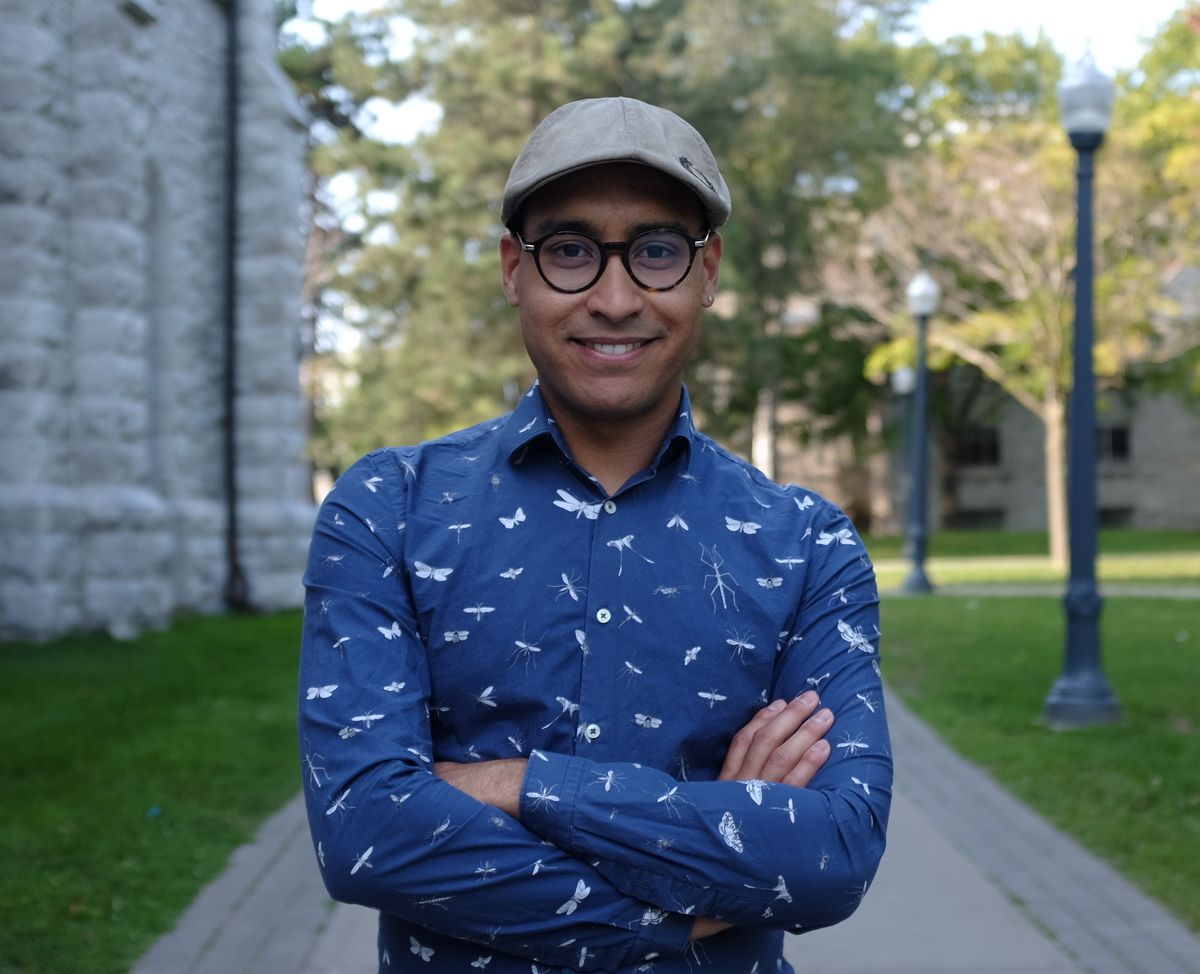

Attention: I am genuinely not seeking compliments, seriously. This piece is simply about naming feelings, sharing reflections, and being honest about the vulnerabilities that many of us carry.
Growing up, I often felt ugly. It always felt like something was missing: some undefined element that other people seemed to have. I remember my early dating days as an undergraduate student and feeling genuinely grateful that someone, anyone, would even consider dating me. I interpreted their interest less as mutual attraction and more as luck. A kind of “I can’t believe they picked me” energy that some of us quietly carry.
People around me sometimes reinforced this feeling, often without realizing it. Comments like, “Wow, tell me how you managed to land someone like him,” lingered longer than they should have. They weren’t meant to be cruel. But they worked like little mirrors, reflecting back the idea that my own desirability was a mystery, even to others.
I often like to tell my students that the best sociological theories are the ones we can experience: the ones we can feel in our skin coming alive. To me, sexual capital is one of those theoretical concepts that becomes concrete on a daily basis. It shows up in the glances we do or don’t receive, in who gets approached, in who is celebrated, and in who is overlooked. It lives in our dating apps, our nightclubs, our relationships, and our insecurities. It is both deeply social and painfully personal.
What is sexual capital?
In simple terms, sexual capital refers to the value a person is given in systems of attraction and desirability. It's shaped by social norms, things like race, body size, disability, gender expression, age, conventional beauty standards, and even how well you fit into dominant queer aesthetics. It’s not about who you are but about what the culture around you tends to reward, ignore, or devalue.
Sexual capital is a form of power, even if it doesn’t always feel like it. Some people move through dating spaces with an abundance of it: doors open for them, matches appear easily, others compete for their attention. Some people, despite being kind, brilliant, funny, or emotionally generous, constantly feel like they are climbing uphill just to be seen.
I have spent years studying sexual fields, erotic capital, and desirability politics. I write about them, I teach them, I analyze them with my students. So you might assume that understanding these hierarchies, how they are produced, how they reproduce inequality, would make me immune to their emotional impact.
It doesn’t.
The sting of being called “ugly”
In the past year alone, I’ve been called “ugly” at least three times by gay men. Sometimes online, sometimes in passing, sometimes wrapped in a tone that suggests they didn’t think it would matter.
But it does.
Not because I am seeking compliments or reassurance (I am truly not writing this to be told I am handsome). It matters because these moments reveal the deep fragility and vulnerability that live inside so many of us, especially within queer communities where desirability can feel like a currency, a sorting mechanism, a way of deciding who counts.
It’s also because, when I interview disabled people for my research, and they share similar experiences—not feeling desired, not feeling desirable—it hits something in me. Not academically. Personally. I recognize the quiet ache in their stories. I know the feeling of shrinking inward, of wondering whether you will ever be someone's “type,” or if you are always the exception someone "makes" when they are feeling generous.
The number of disabled people in the community who have told me they “have no chance anyway,” that they’ve quit pursuing intimate relationships, or decided to take a back seat and wait passively for something, anything, to happen, is heartbreaking. It reveals how deeply these hierarchies cut, and how profoundly they shape people’s willingness to imagine ourselves as desirable or deserving of connection.
Especially when navigating certain queer spaces and leaving alone (no hookup, no flirtation, no prince charming emerging from the middle of the dancefloor), I could not help but feel sad, like I simply wasn’t good enough. There is something about those environments, with their unspoken hierarchies and their measuring glances, that can amplify every insecurity.
You walk in hoping to feel part of a community, or at least visible within it, and yet you leave with the quiet ache of feeling passed over. It is not that I believed love or desire were owed to me, but the absence of being chosen in those moments felt like confirmation of an old story: that there was something lacking in me, something others could see even when I tried not to.
Moments of affirmation
And yet, there are moments when I feel great. Days when my Latino booty seems to be perfectly shaped, when my smile feels like it carries light, when my moustache frames my face just right and I catch myself thinking, damn, okay.
And thank God for Mariah Carey, truly. There is something wonderfully affirming about the way she belts out confidence and unapologetic self-worth. I think of the many times I’ve showered while singing her song “Touch My Body,” feeling gorgeous and playful and fully alive in my own skin: a small, private rebellion against voices that told me otherwise.
But those moments can feel fleeting, too easily overshadowed by the comments that insist on naming the opposite.
Why I’m writing this
This isn’t a plea for reassurance. It’s an attempt to write honestly about what it means to navigate desirability as a queer, disabled, racialized person who studies this stuff and still feels the sting. It was the atmosphere of quiet appraisal that so many of us internalize, the sense that desirability operates as a kind of currency.
It’s about the tenderness required to move through a world that constantly ranks bodies. It’s about naming the small violences that accumulate over time. It’s about recognizing that understanding inequality does not protect us from feeling its effects.
These moments aren’t simply about bruised ego or romantic disappointment; they reveal something deeper about whose bodies and minds are affirmed and whose are overlooked. And beneath that sadness sits a longing for something different: for spaces that practice more openness, more softness, more kindness, where people can enter without being instantly sorted into categories of “wanted” and “not wanted,” and where connection is not reduced to how closely we match a narrow ideal.
